Some of us need to get their hands muddy to create. This is not a bare inconvenience of the medium, it is artist’s necessity to experience a tactile sensation of clay, mud, shapes. A blind person will recognize objects, faces, a three-dimensional art by touch. Many potters shape their creations on a pottery wheel with closed eyes. As I cannot speak from the experience, here is the sensation described by our own clay and pottery artists.
Sanda: ‘As your hands sink into the natural materials like clay, and shapes start to emerge, you descend into a relaxed and centered balance with your surroundings. The soothing bond with clay and water running through the fingers creates both calming and uplifting experience.’
Pottery is an ancient tradition – you can dive into its history to learn about civilizations gone – it is their legacy.
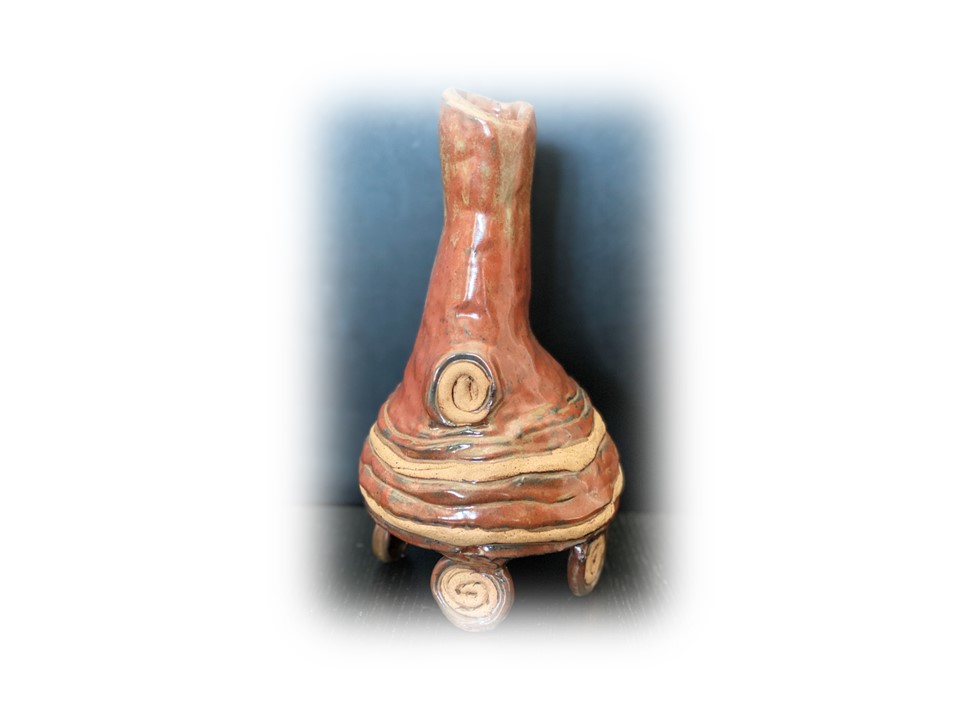
Pottery is also embedded into our own everyday life – it contributes to richness of our dining tables, decorates our homes and gardens, tells stories of different cultures, and sometimes makes an unique art display. From my travels, I always bring home a pottery piece from a local artist – raku from Banff, Japanese bowls, unique Arizona style, village of Almonte…
Pottery decorations are as different as the cultures they originate from. Styles and colors sometimes make the provenance instantly recognizable; other times, unusual shades and patterns are the result of unexpected local innovations.
The following presentations promise a joyful journey through pottery experiments in our group.
For the second, bring along a margarita to complement a sun-bursting display of pottery styles practiced by the traditional ceramic artists of Mexico.
 Left Brain Artists